
Knowledge is Power.
Sharing Knowledge Empowers Others.
Now you can download and share Brain Executive Infographics
Use promo code Buy2Get1 at checkout to get one free download when you buy two!
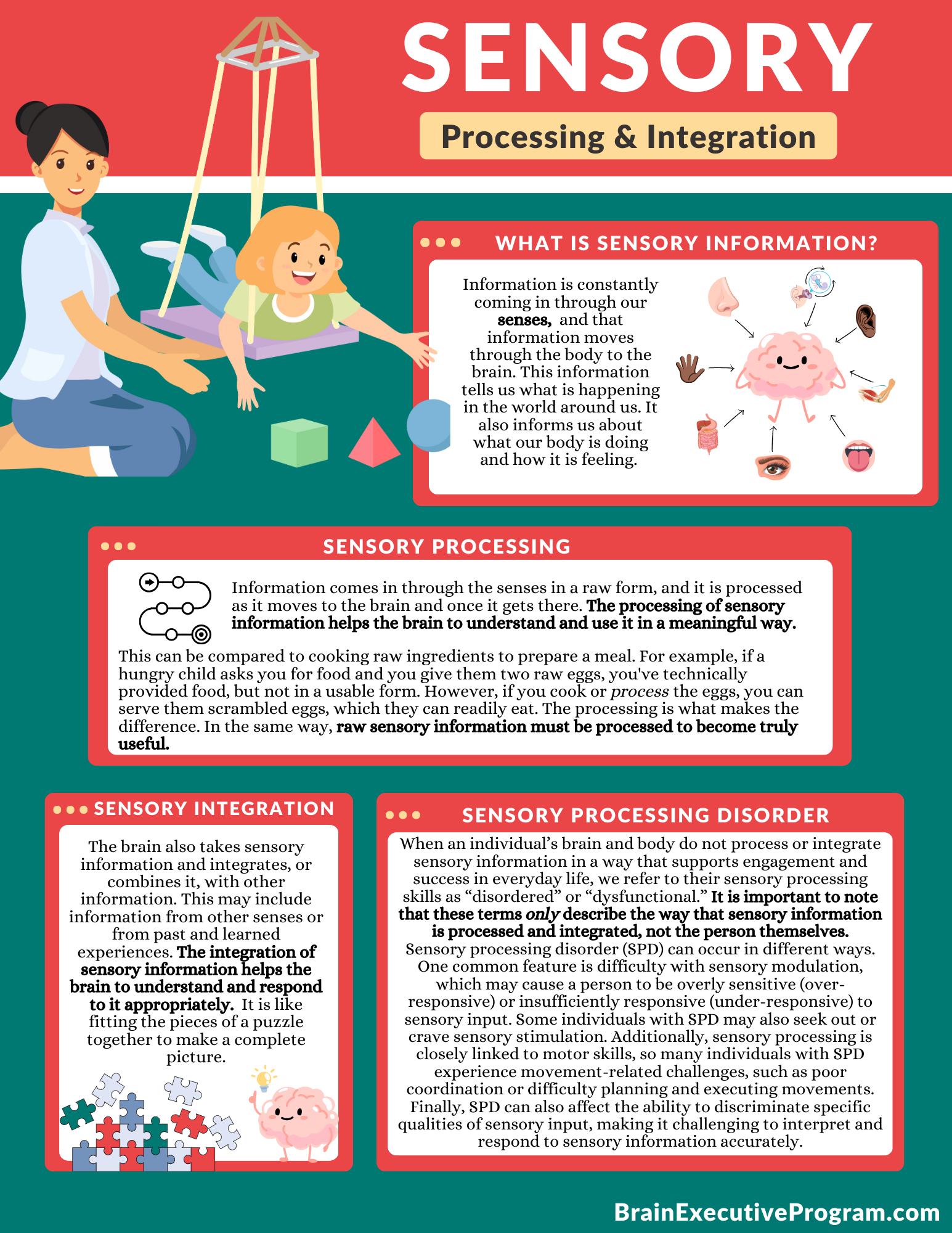
Download and share this infographic that explains sensory processing and integration the Brain Executive way - translating sensory neuroscience into everyday language.
Download includes PDF of both a full color and a greyscale version.
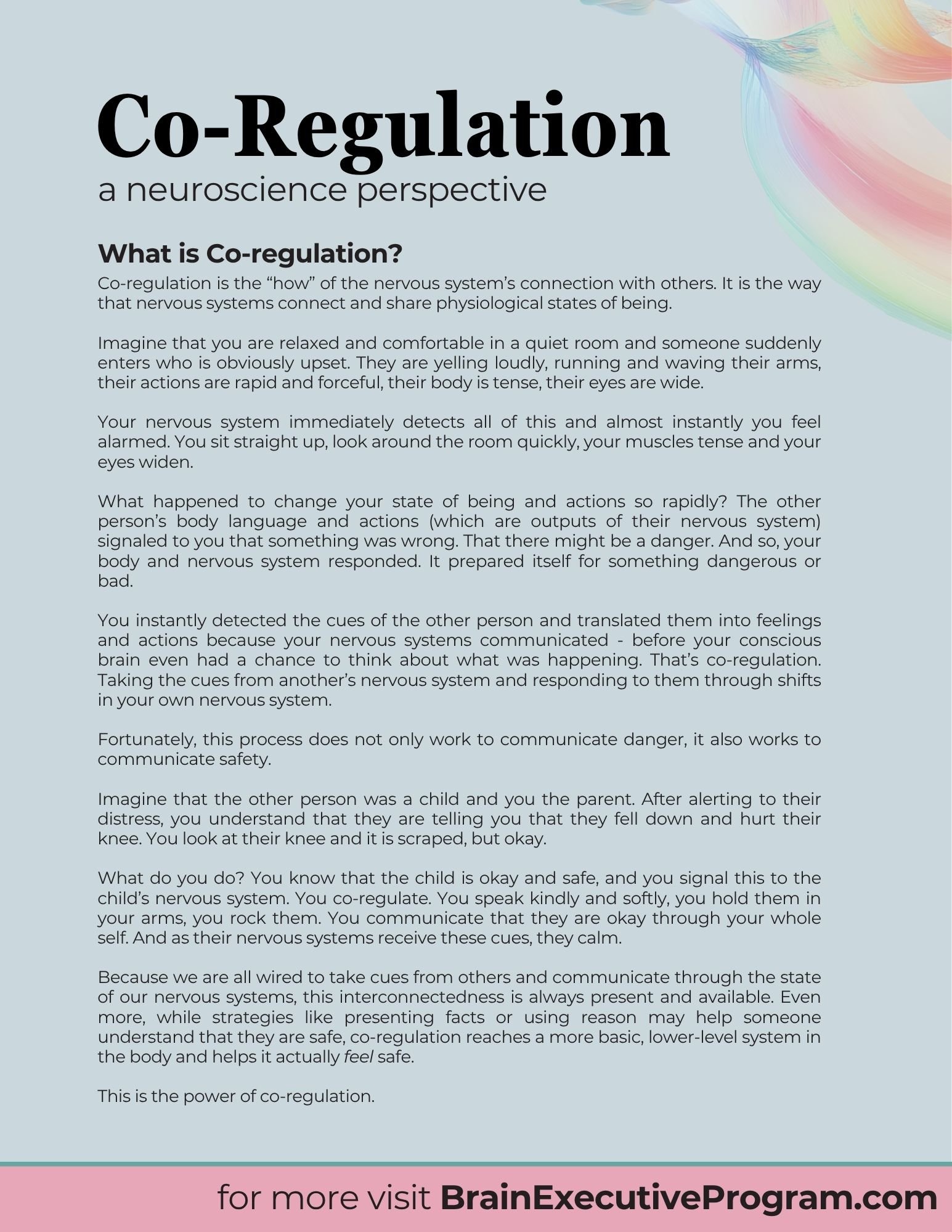
Co-regulation is the “how” of the nervous system’s connection with others. It is the way that nervous systems connect and share states of being, and it can be used on purpose to support regulation.
Learn about co-regulation and how it works in this infographic. Print, Learn, Share.
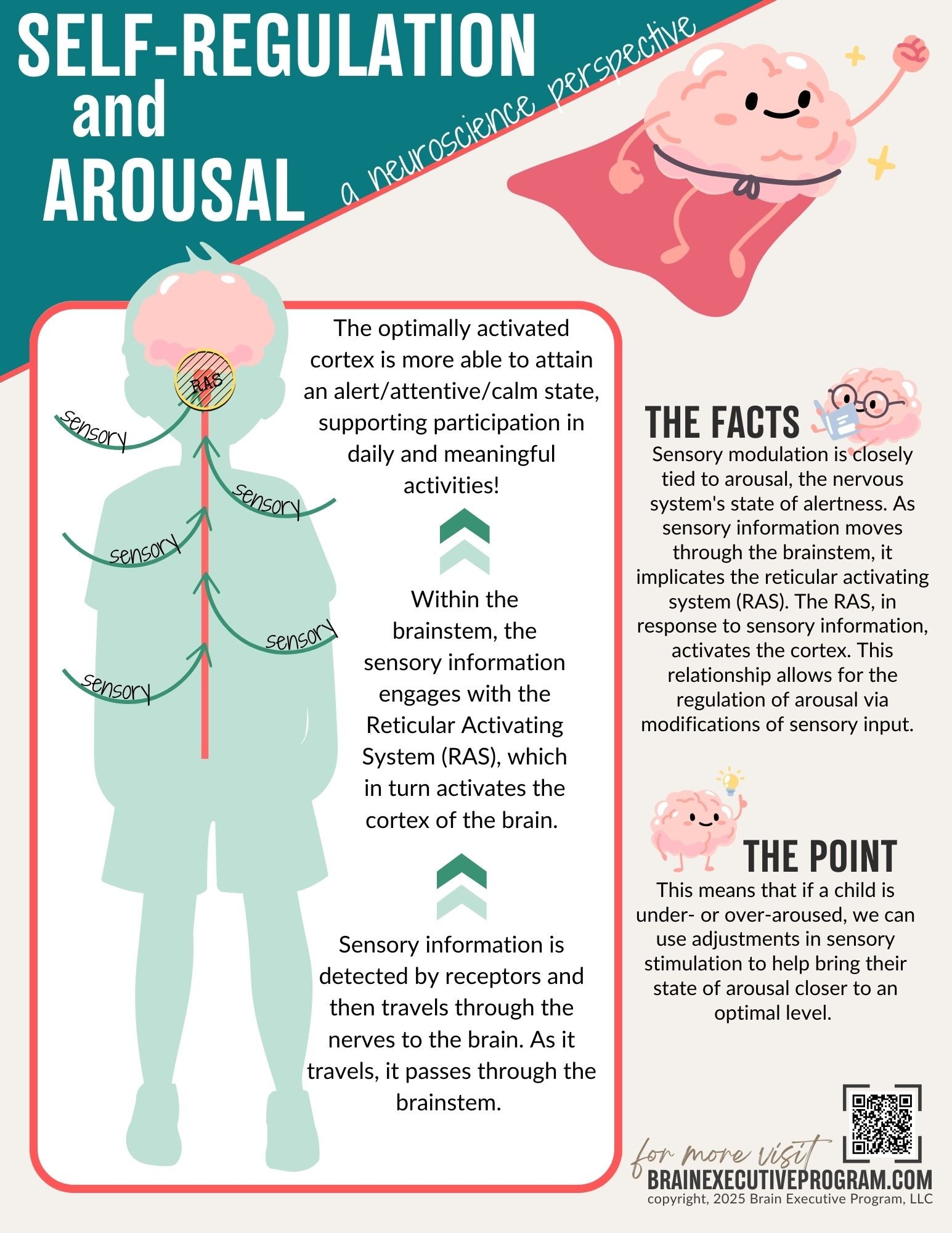
Sensory processing and integration are closely tied to arousal, thus, we can understand and support arousal better when we consider it through a sensory lens! The Reticular Activating System, a part of the brainstem’s reticular formation, is a key player in this sensory-arousal relationship. In this infographic, this relationship is explained, giving a neuroscience perspective to arousal and sensory processing. If you would like to understand and apply how this small part of the brainstem has a huge impact on sensory processing and integration, under- and over-stimulation, sensory modulation, and functional arousal, this infographic is for you.
Download features a 4-page PDF explaining these concepts in both clinical and non-clinical terms, with a link to a video that shows how this relationship can be imagined. Neuroscience comes to life when we can visual it at work!
Download this infographic to learn, print, and share.
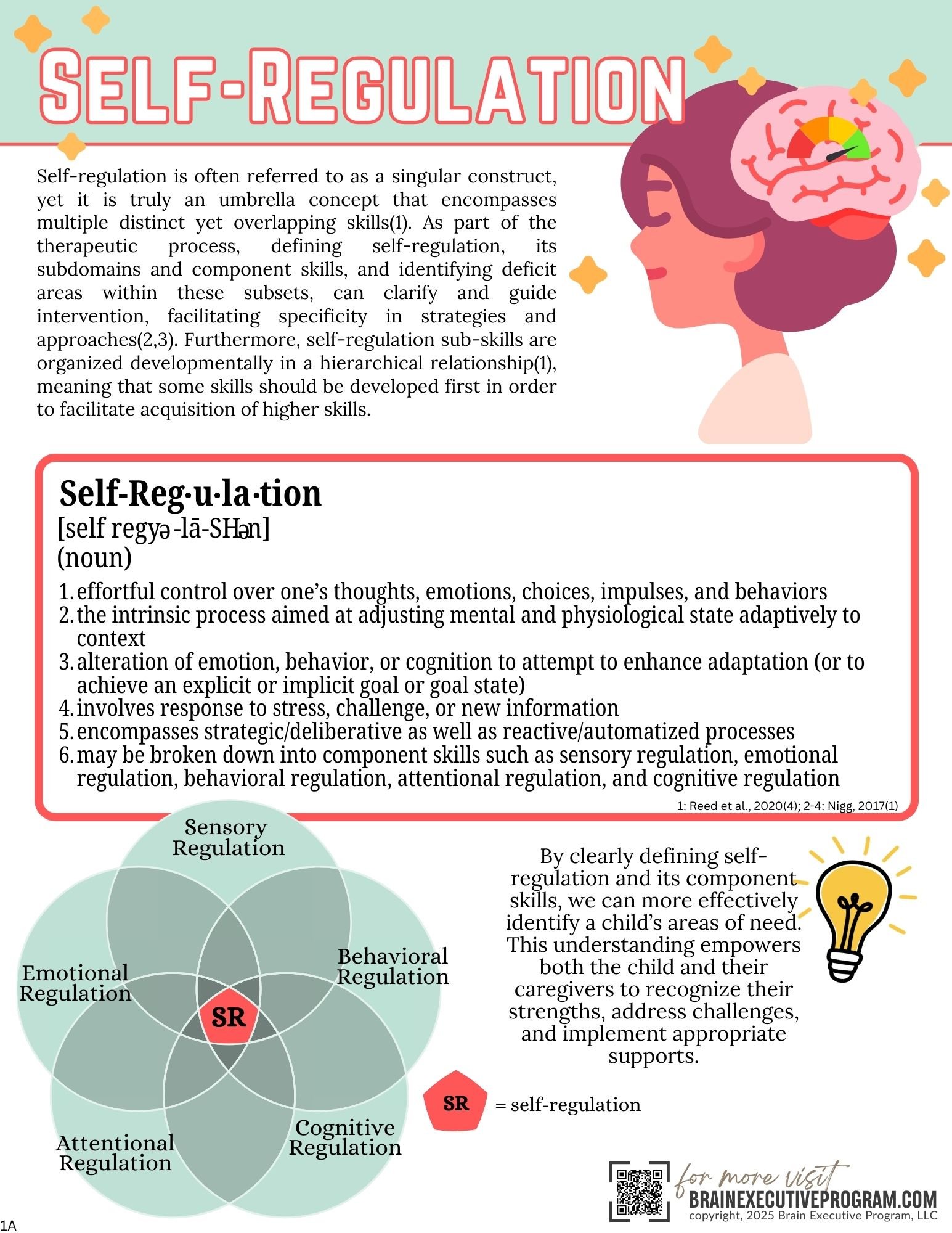
Self-regulation is often referred to as a singular construct, yet it is truly an umbrella concept that encompasses multiple distinct yet overlapping skills. This infographic explores the components of self-regulation so that we can more effectively identify a child’s areas of need, empowers the clinician, the child, and their caregivers to recognize strengths, address challenges, and implement appropriate supports.
This infographic features a 3-page PDF explaining these concepts in clinical terms, with 3 additional pages that shares the same ideas in non-clinical terms. Together they can be used to inform a clinical team as well as for handouts for parents, caregivers, teachers, and other non-clinical collaborators.
Download this infographic to learn, print, and share!

Use color cueing to support sleep by helping your child understand sleeping through the night - with color!
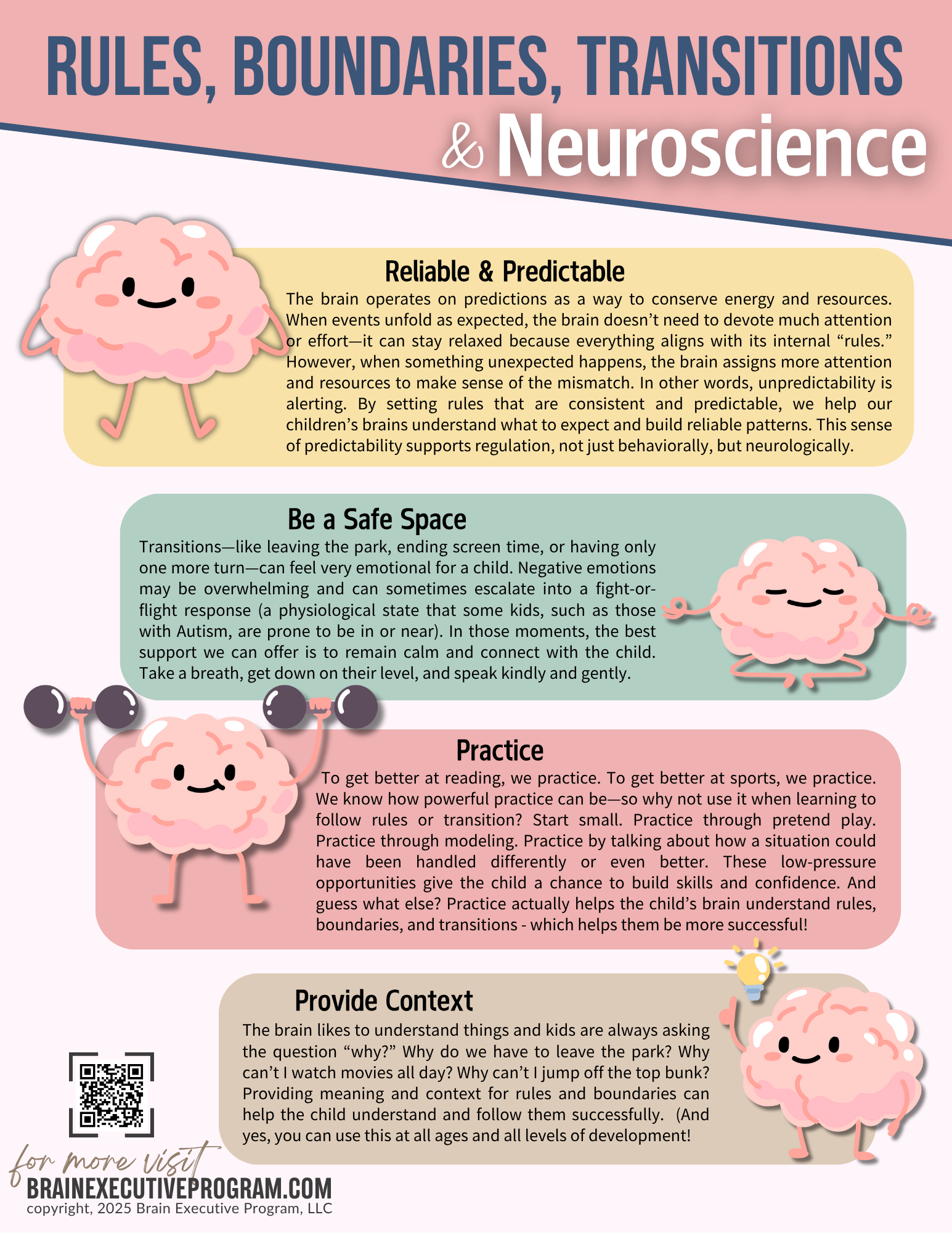
Understand how to support a child in following rules, boundaries, and transitions - through neuroscience! This is a great parent/caregiver handout!

Created by an occupational therapist and Autism Spectrum Disorder Clinical Specialist - understand how to best support an Autistic child through rules, boundaries, and transitions!
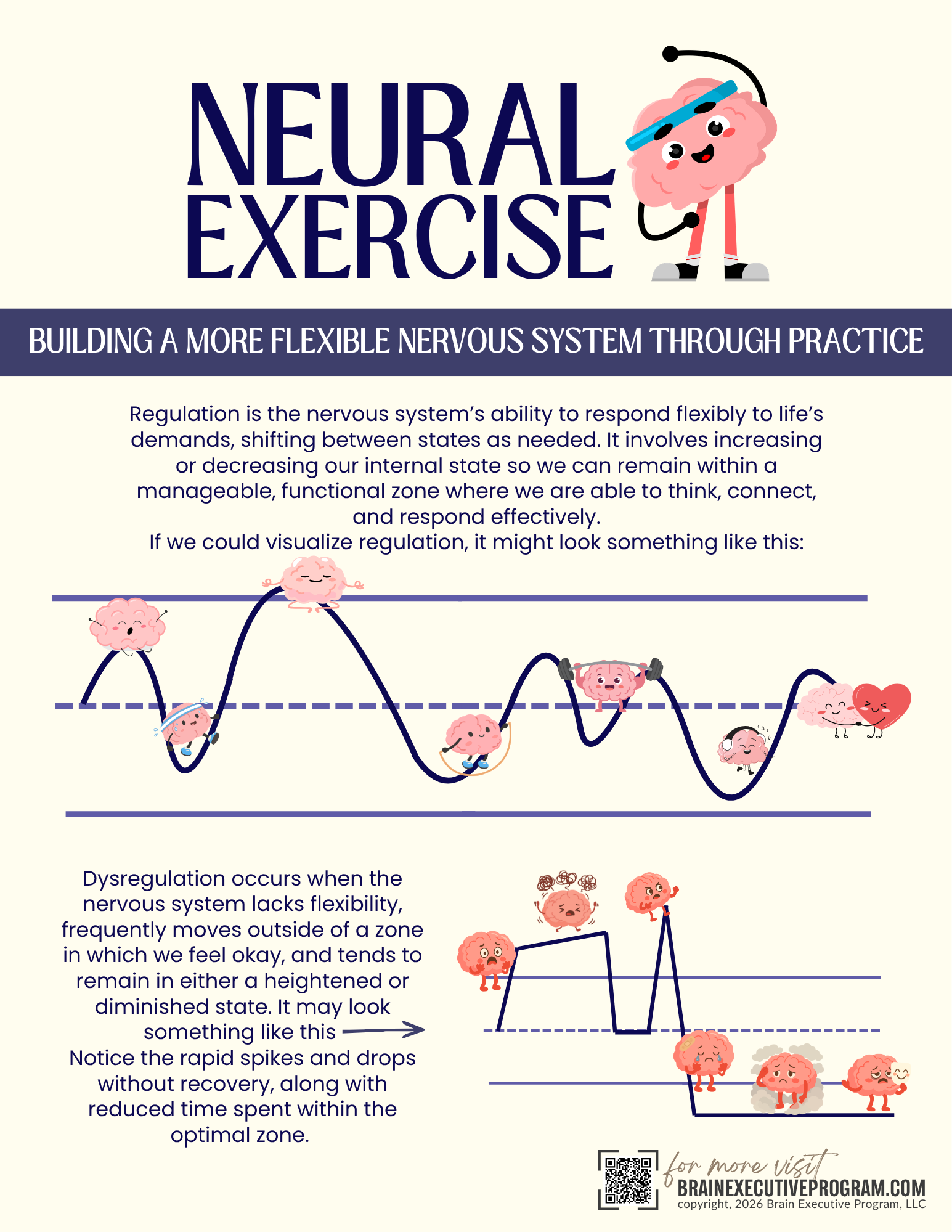
Download and share this infographic that explains how to support a child in increasing their regulation skills.
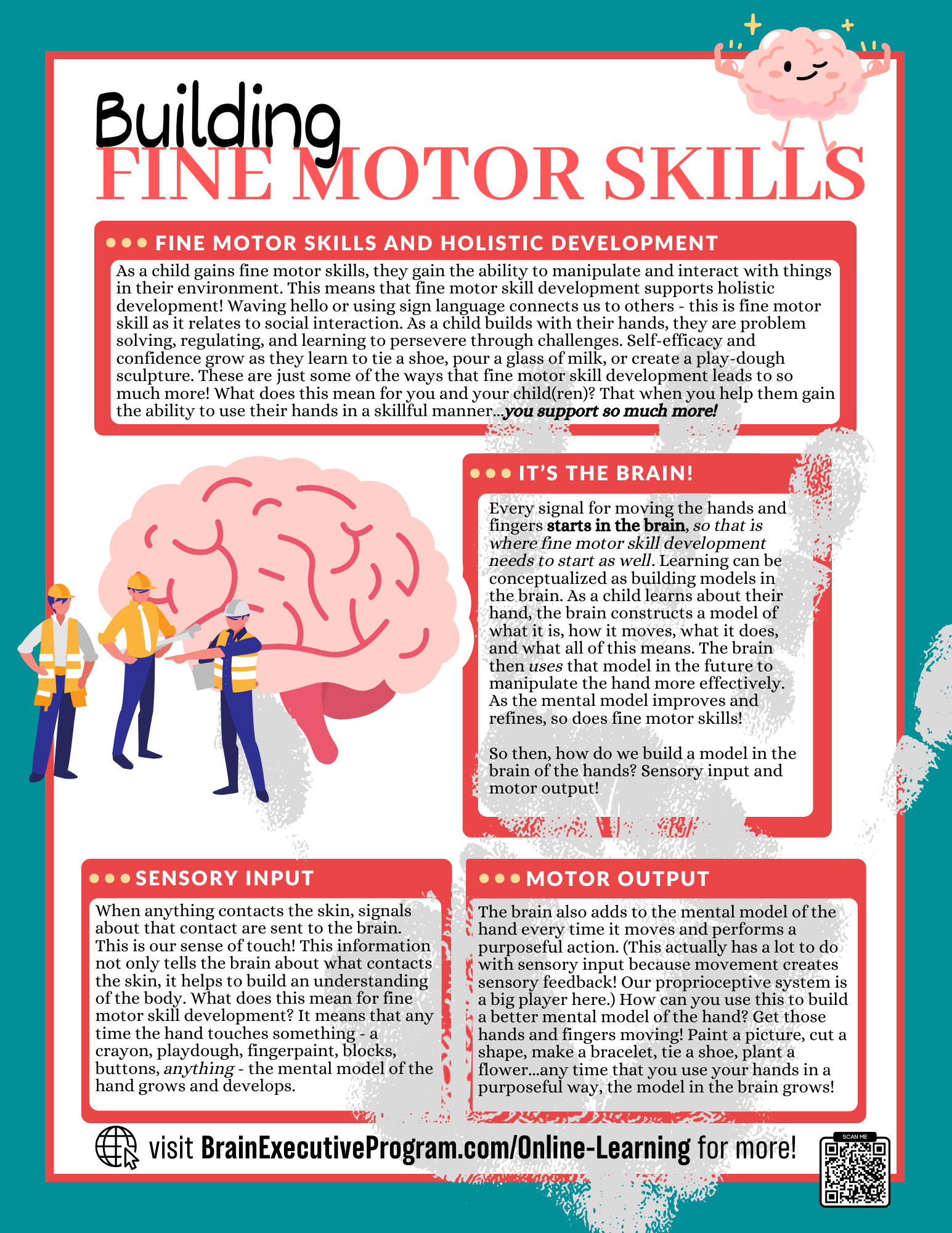
Download and share this infographic that explains how to build a mental model of the hand and fingers to support fine motor skill development.
This partners with the Fine Motor Skills: Beyond the Hands online course!
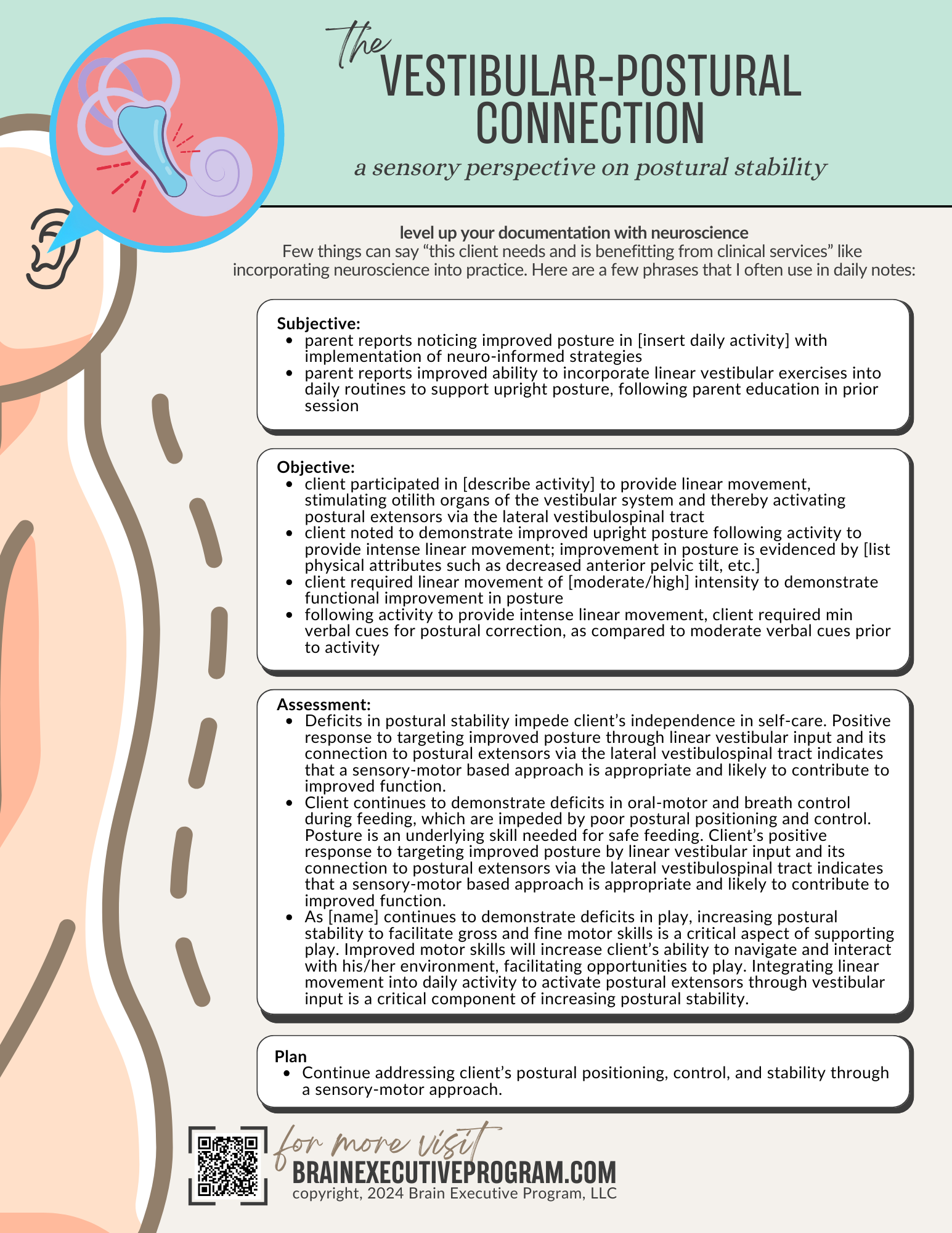
Understanding the neuroscience of the vestibular-postural connection means that you can put this connection to work in a powerful way!
Download this infographic to learn, print, and share! It includes a “neuro-heavy” version of the information that provides a more clinical and technical perspective as well as a “neuro-lite” version that is a great handout for parents and caregivers. Purchase also includes access to a short informational video, a printout that offers pointers and idea for putting this connection to work, and a cheat sheet for using the neuroscience in daily notes!

Noise cancelling headphones is one of the most common and familiar sensory supports used by children with auditory sensitivities or over-responsiveness to sounds. Here are a few things to keep in mind when using them.
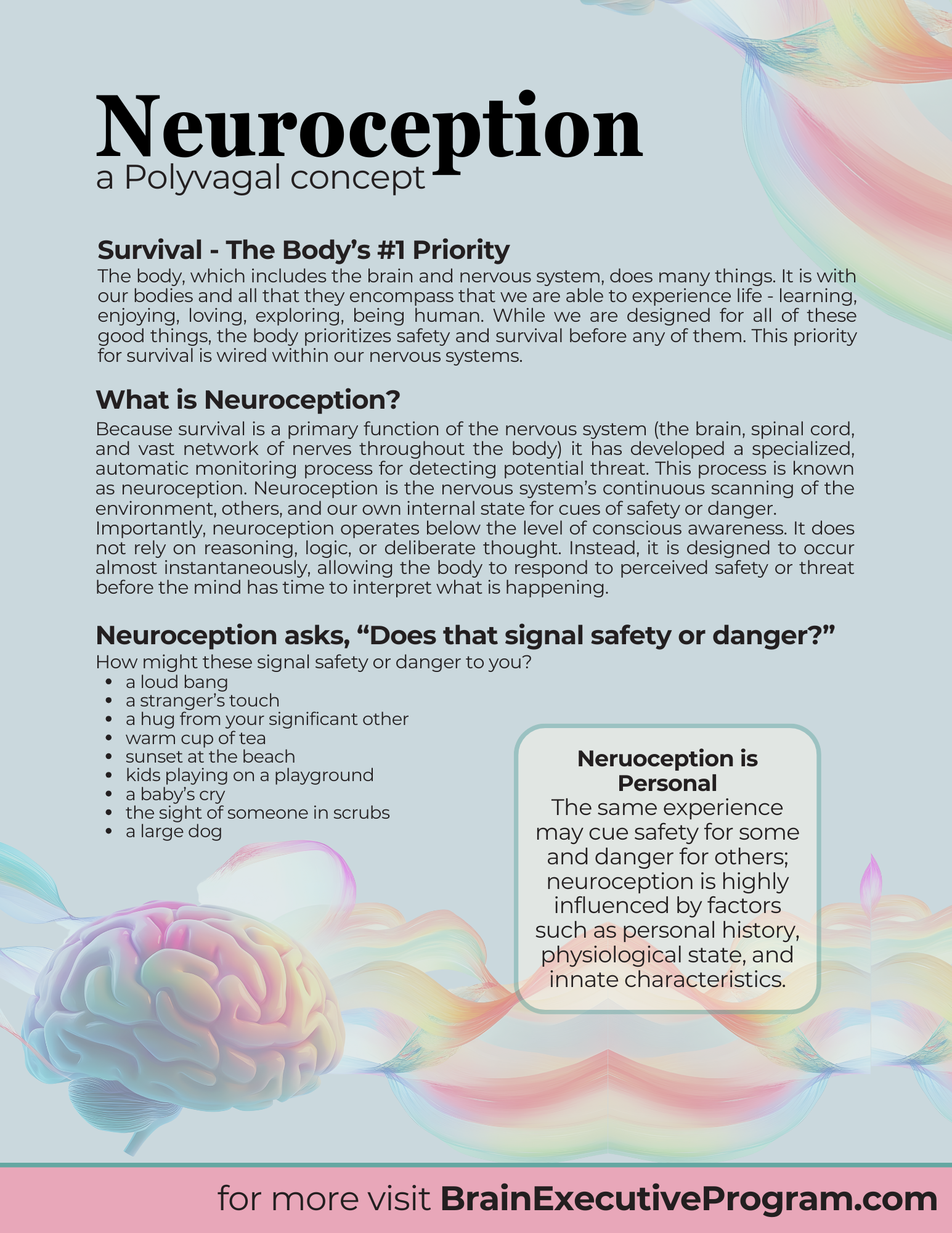
Neuroception is a key component of the Polyvagal Theory. This 2-page infographic explains, in everyday language, how the nervous system monitors for, detects, and responds to cues of safety or danger. Download, print, and share!

Understanding these two basic perspectives for supporting a child with sensory differences can help to design and implement targeted and effective supports. This infographic takes two theory-based visuals from the leading SI practitioners and considers them through both habilitative and compensatory lenses. Learn when help a child “in the moment” and when to target long-term learning.
Download this infographic to learn, print, and share!
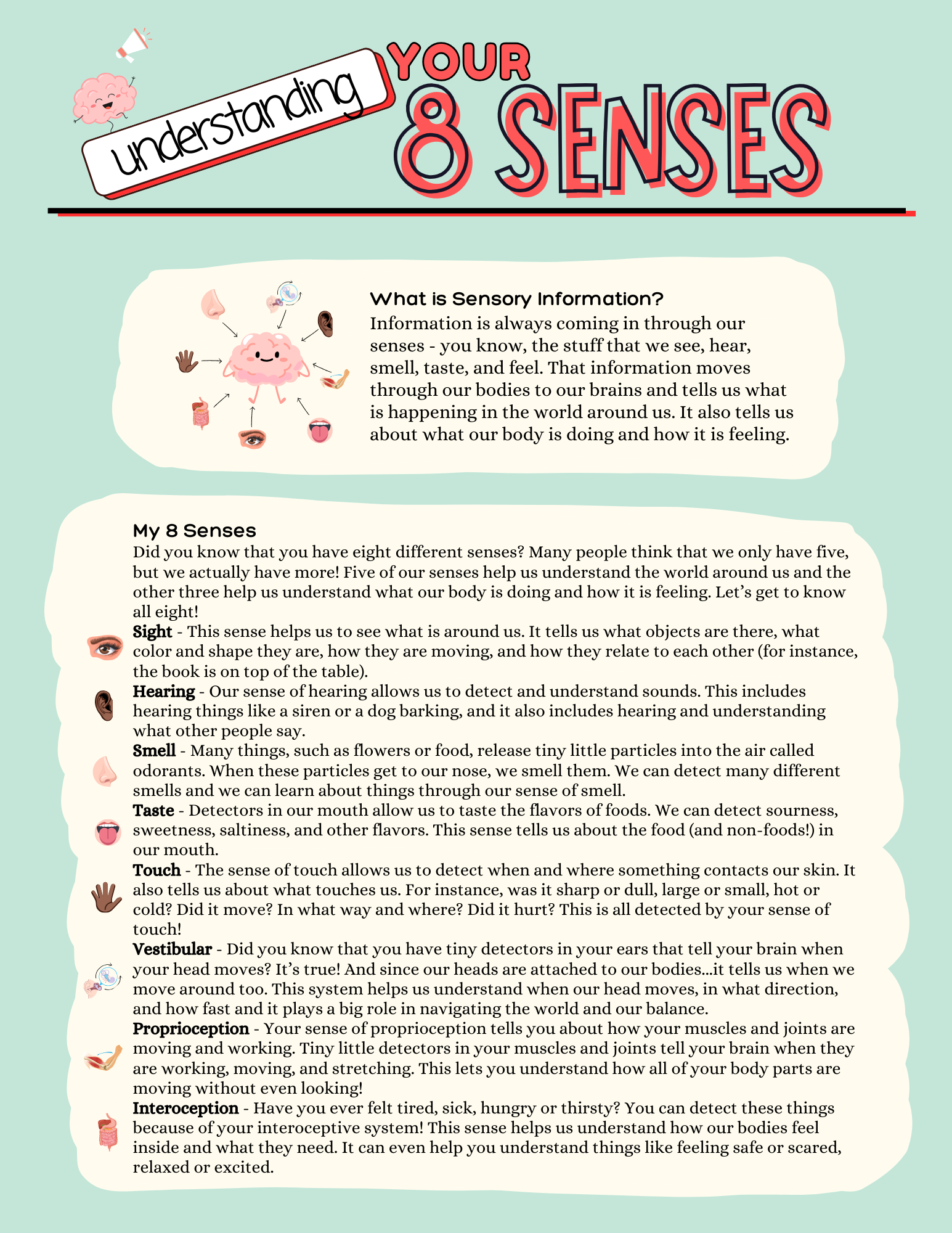
Download and share this infographic that explains sensory information and the eight senses in "kid language."
Download includes PDF of three pages. The first explains each sense, the second is an activity sheet to complete that applies this information, and the third provides an activity that uses a water bottle to explain the vestibular system.

Use these 6 pages to help kids understand emotions and energy - how they are related and how we can use that knowledge to regulate! Each page features activities as well as concepts presented in child-friendly language. If you are a clinician, you can buy once and use again and again!
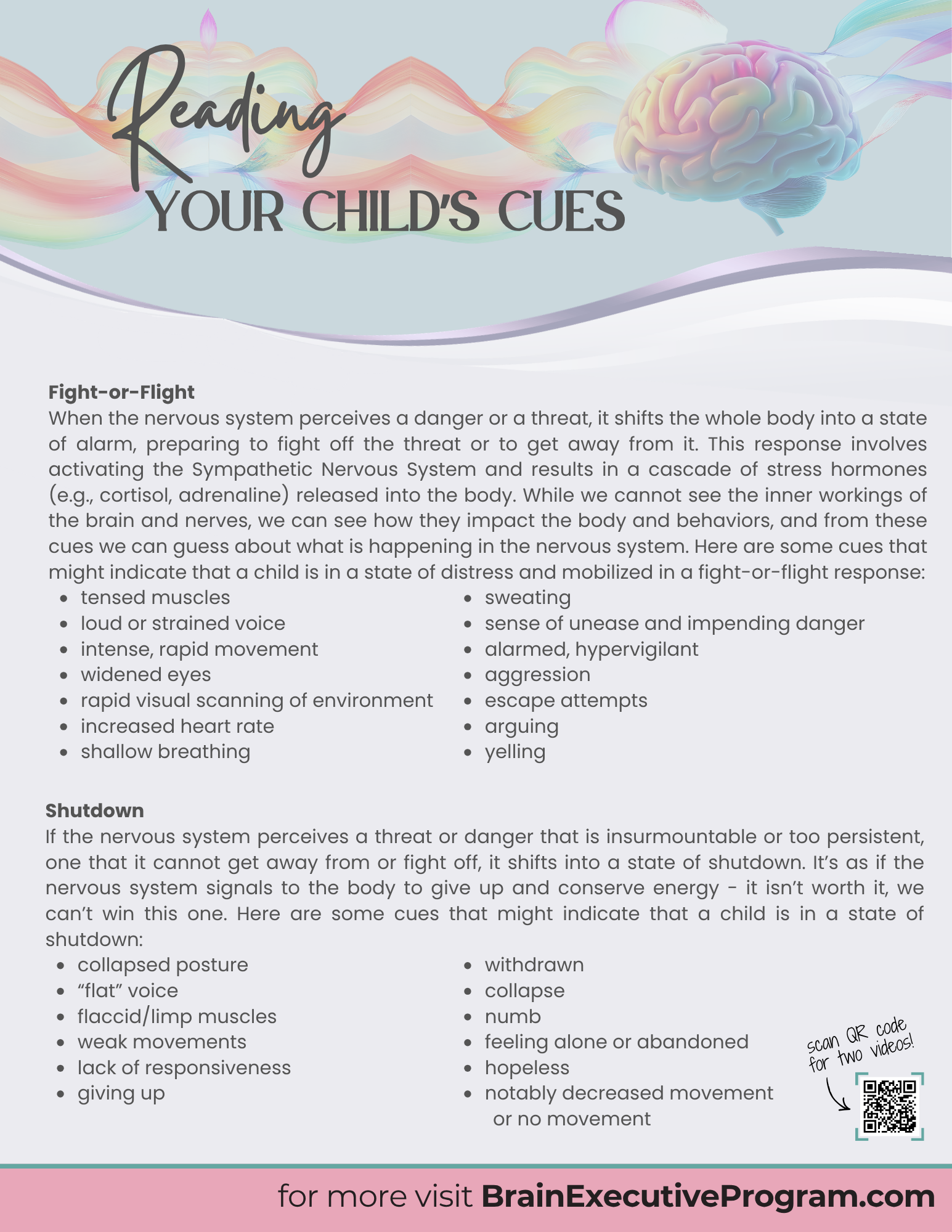
When the nervous system of a child perceives a threat or danger and shifts into a physiological state of distress - whether that be through a mobilized, sympathetic dominated, fight-or-flight response, or a demobilized shutdown response - they are physiologically unable to fully engage in everyday, developmentally appropriate experiences like connecting with family, playing with peers, or learning in the classroom.
Because of the direct impact on everyday life and functional skill, these observations and an explanation of their impact belongs in our session notes! Here is a sample of how to document as well as a shareable infographic!